Demolition Services
Demolition Contractor — Structures, Slabs & Interiors
Tearing something down is the easy part. Doing it with the utilities disconnected, the permits pulled, the debris sorted, the neighbors respected and the site left clean and gradeable — that is the actual job.
Overview
Full, Selective And Interior Demolition
Beast Construction Inc performs demolition as a controlled, permitted process rather than a wrecking spree. Before a machine touches a structure we confirm utility disconnects in writing, verify permits, screen for asbestos and other regulated materials where the age of the building warrants it, protect adjacent structures and trees, and plan debris handling and truck routing so the work does not turn the street into a hazard.
We handle full structural demolition of houses, garages, barns, sheds, mobile and manufactured homes, and commercial buildings; selective demolition where part of a structure comes down and the rest stays standing; interior strip-outs for renovation and tenant fit-up; and hard demolition of concrete slabs, foundations, walls, silos, pools and pavement.
Because we are also a general contractor, demolition is usually the front half of a project rather than the whole thing. The same crew can strip an interior and hand it to our remodeling team, or take a structure down and roll straight into excavation, grading and a new foundation without a gap in the schedule.
House, Barn & Mobile Home Demolition
Residential demolition starts with the paperwork: demolition permit, utility disconnect confirmations from the power, gas, water and sewer providers, well and septic abandonment where applicable, and an asbestos survey where the building’s age or materials call for it. Skipping those steps is how a small job becomes a legal problem. Once cleared, we take the structure down in a controlled sequence, separate metal and recyclables where practical, and haul debris to a licensed facility.
Old barns, tobacco barns, sheds and outbuildings across Southside and Central Virginia often contain reusable lumber, tin and beams. If you want material salvaged, tell us before we mobilize and we will build that into the plan — careful dismantling costs more in labor and less in disposal. Mobile and manufactured home removal includes the frame, skirting, piers, tie-downs, steps and the utility stubs left behind.
Concrete, Slab, Pool & Pavement Removal
Hard demolition covers driveways, sidewalks, patios, garage and shop slabs, foundation walls, footings, retaining walls, silos, grain bins, loading docks, curb and gutter, and asphalt pavement. Concrete can often be crushed and reused on site as fill or base, which saves both hauling and stone purchase — we will tell you when that math works in your favor.
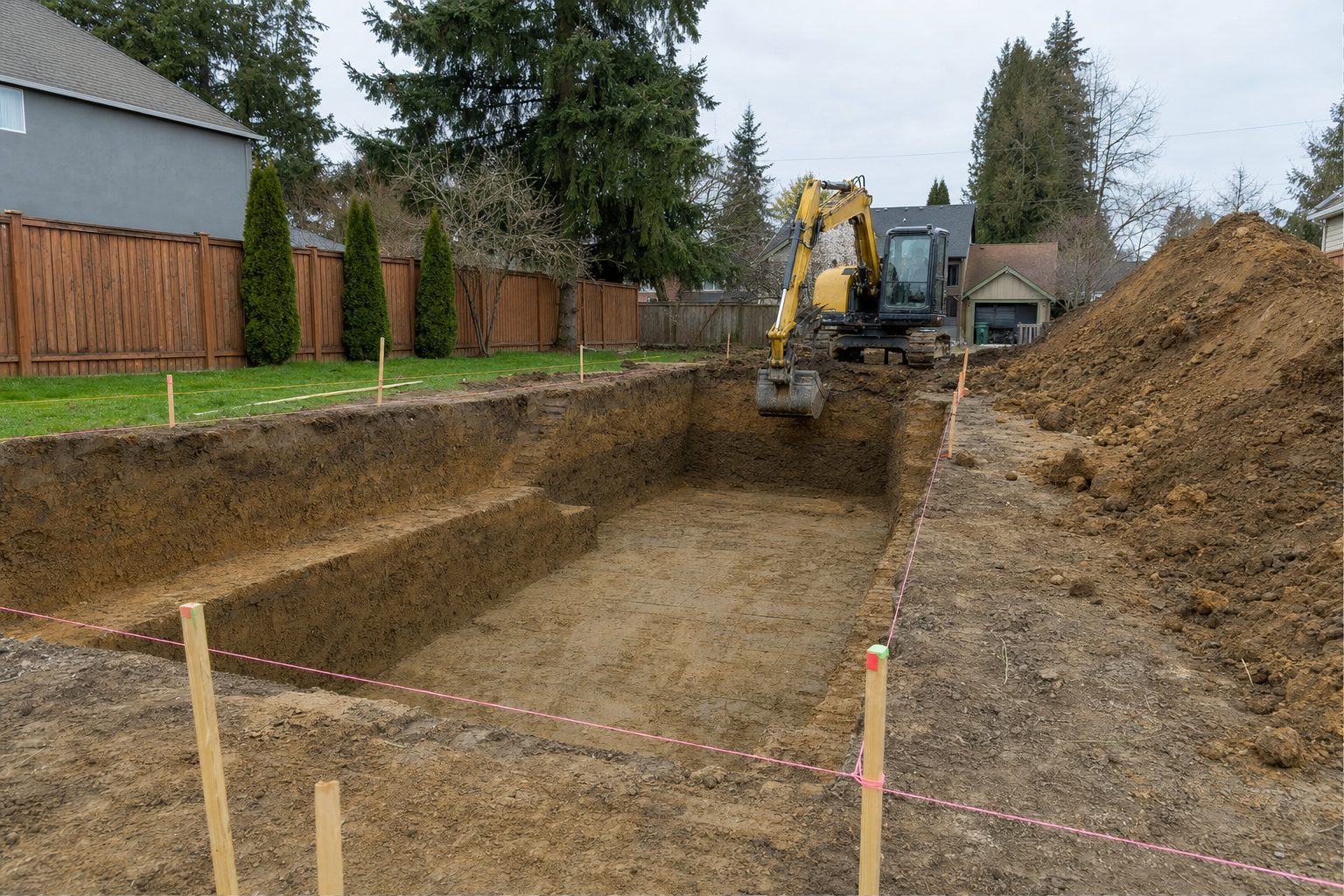
Swimming pool removal comes in two forms. Full removal takes out all shell, coping, decking and plumbing, then backfills with compacted engineered fill so the area is buildable later. Partial removal breaks and perforates the bottom, collapses the walls into the void and backfills — cheaper, but it must be disclosed on future property transfers and generally cannot be built on. We explain the trade-off before you choose, and pair the work with hardscaping or new concrete if the space is being repurposed.
Interior & Selective Demolition For Renovation
Interior demolition for a remodel or commercial fit-up demands surgical care: protect what stays, brace what is load-bearing, control dust with containment and negative air where needed, protect floors and elevators, and remove debris without damaging finishes in the rest of the building. We strip cabinets, flooring, drywall, ceilings, non-structural partitions, mechanical and electrical rough-in, and tenant improvements down to whatever your plans call for.
Selective exterior demolition — removing an addition, a porch, a wing of a building, a chimney, or a section of roof structure — requires temporary shoring, weather protection and a plan to close the building envelope the same day it is opened. This is exactly where hiring a general contractor rather than a demo-only outfit pays off, because our roofing and exterior and framing crews can dry the building in immediately.
Debris Handling, Recycling & Site Restoration
Demolition produces tonnage, and how it is handled shows up in both your invoice and your environmental exposure. We separate scrap metal, clean concrete, wood and mixed C&D where the local facilities support it, keep hauling tickets, and dispose at licensed landfills and recycling centers. Regulated materials such as asbestos-containing materials, lead paint debris, fuel tanks and refrigerant-containing equipment are handled by properly licensed specialists with documentation.
When the structure is gone, the site should look intentional, not abandoned. We remove foundations and slabs to the depth agreed, pull buried debris, backfill with compacted suitable fill, rough grade for drainage, and seed and straw or stabilize as needed. Serving Virginia, Florida, Utah, California and Wyoming.
Scope of work
What’s Included
Every demolition estimate spells out what comes down, what stays, where the debris goes and how the site is left. Typical scope:
- Site assessment and demolition planning
- Demolition permit application and coordination
- Utility disconnect verification with each provider
- Well and septic abandonment coordination
- Asbestos and lead screening referrals where required
- Adjacent structure, tree and fence protection
- Salvage of designated materials on request
- Full structural demolition and removal
- Selective and interior demolition with containment
- Mobile and manufactured home removal
- Concrete slab, footing and foundation removal
- Pool removal, full or partial with disclosure
- Asphalt and pavement removal
- Debris sorting, recycling and licensed disposal
- Backfill with compacted suitable fill
- Rough grading, seeding and site cleanup
Something Need To Come Down?
Send photos, the approximate square footage and the year built if you know it. We will tell you what the permits and disconnects require and what the removal costs.
How we work
Our Demolition Process
Paperwork first, machines second. That order keeps demolition projects out of trouble.
Assess & Quote
We inspect the structure, note materials, access and adjacent risks, and issue a written scope with disposal and restoration defined.
Permits & Disconnects
Demolition permits are filed and every utility disconnect is confirmed in writing before mobilization.
Protect & Demolish
Neighboring structures, trees and finishes are protected, then the structure comes down in a controlled sequence.
Haul, Backfill & Grade
Debris is sorted and legally disposed, voids are backfilled and compacted, and the site is graded and stabilized.
Keep it under one contract
Demolition Is Rarely The End Goal
Nobody demolishes a building for fun — there is always something coming next. Keeping demolition and the rebuild under one contract means the person who removed the old foundation is the same person accountable for the new one sitting level and dry.
Planning a teardown and rebuild? Talk to our estimating team or review our full service list to see how much of the project we can carry.
Answers
Frequently Asked Questions
What property owners need to know before scheduling demolition.
Do I need a permit to demolish a building?
In nearly every jurisdiction, yes — and the permit usually requires proof that gas, electric, water and sewer have been disconnected by the utilities first, plus an asbestos survey for older structures. Requirements differ between the five states we serve and often between counties. We handle the application and the coordination as part of the job.
How much does it cost to demolish a house?
Cost is driven by square footage, number of stories, construction type, foundation and slab removal, distance to a licensed landfill, tipping fees, and whether regulated materials such as asbestos are present. Detached garages and mobile homes sit at the low end; a large home with a full basement and long haul distance sits much higher. We quote it as a written, itemized scope after inspecting the structure.
Can I salvage materials before demolition?
Yes, and it is often worth doing. Barn beams, heart pine flooring, tin roofing, brick, fixtures, appliances and cabinetry all have value. Tell us before we mobilize so we can plan careful dismantling for those items — it adds labor time but reduces disposal tonnage and can offset part of the cost.
What is the difference between full and partial pool removal?
Full removal takes out the entire shell, decking and plumbing and backfills with compacted engineered fill, leaving ground that can be built on later. Partial removal breaks the bottom for drainage, collapses the walls inward and backfills — less expensive, but the fill is generally not suitable to build on and the former pool typically must be disclosed when the property sells.
How long does demolition take?
Physical demolition of a typical house is often one to three days once permits and disconnects are in hand. The paperwork ahead of it — utility disconnects in particular — commonly takes two to four weeks and is the real driver of the schedule. Interior demolition timelines depend on how much protection and containment the occupied portions of the building require.
Ready For A Free Written Estimate?
Call either number, or send your project details and an estimator will follow up — usually the same business day. Serving Virginia, Florida, Utah, California and Wyoming.