Wyoming
Excavation & Construction Contractor In Wyoming
Wyoming gives you a short season, serious wind, deep frost and long distances between everything. Projects here succeed on logistics and honest sequencing more than anywhere else we work.
Overview
High Plains Work, Planned Around Wind And Winter
Wyoming construction is a logistics discipline. Job sites are often far from the nearest batch plant, aggregate source or supply house, the construction season is genuinely short, and the wind is a design load rather than a weather comment. Getting a project done here means front-loading material planning, sequencing earthwork and concrete into the workable months, and building structures that tolerate what winter is going to do to them.
Soils vary widely across the state. The high plains around Cheyenne, Casper and Gillette include bentonite-rich and expansive clay formations that swell dramatically when wet and shrink when dry — notorious for distressing foundations, flatwork and pavement that were not designed for them. Elsewhere you find sandy and gravelly alluvium, shale, sandstone and shallow bedrock, plus caliche layers. Where expansive soils are present, the remedies are the same disciplined ones used anywhere: over-excavation and replacement with select non-expansive fill, moisture control, drainage away from structures, void form or pier and grade beam foundations where engineered.
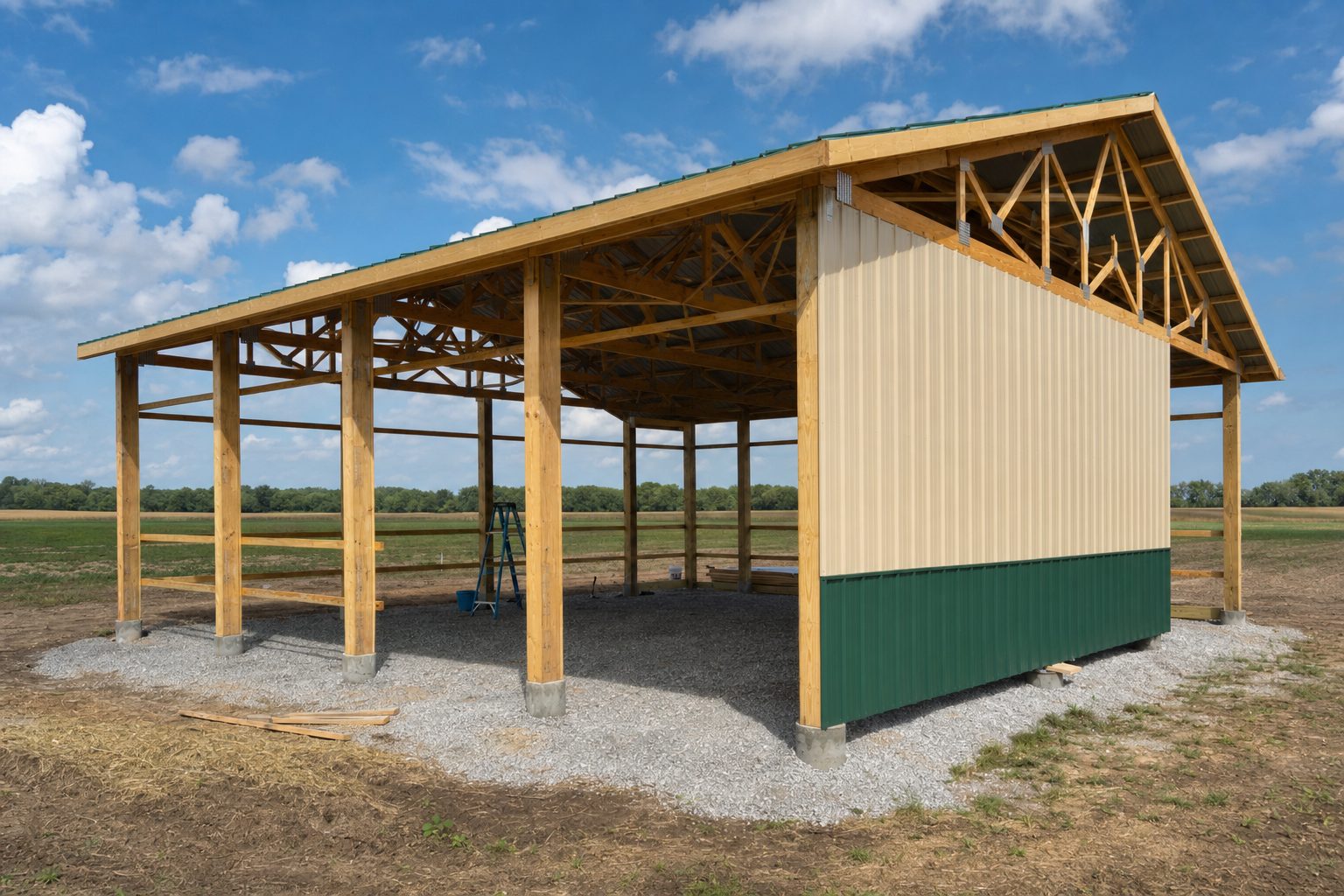
Our Wyoming scopes include site and pad development, access and lease roads, gravel driveways and turnarounds, culverts and stock crossings, utility trenching at frost depth, footings and foundations, stock and livestock water infrastructure coordination, post-frame and steel buildings engineered for extreme wind and snow, and demolition and site reclamation.
Wind, Snow Drift & Deep Frost
Design wind speeds across much of Wyoming are among the highest in the country, and exposed sites are routinely categorized as fully exposed terrain. That drives heavier framing and connection schedules, more anchorage, better door and window ratings, and careful attention to how a metal building's sheeting and trim are fastened. A building that would be adequate in a sheltered Virginia hollow is not adequate on a Wyoming ridge.
Snow behaves differently here too. Drifting is often the controlling load rather than uniform snowfall, so building orientation, roof geometry, drift accumulation against walls and adjacent structures, and where snow sheds relative to doors and drives all matter. Frost depths are deep, which sets footing depth, water line burial and how backfill and drainage details are built. Concrete work in shoulder seasons requires heated mix, blankets and protection, and there are weeks when the right answer is simply to wait.
Access, Distance & Remote Sites
A large share of Wyoming work is remote: ranch property, energy and industrial sites, and rural residential parcels miles from pavement. That means building the access before building the project — gravel roads with proper crown and ditches, culverts sized for spring runoff, cattle guards and gates, turnarounds sized for the equipment and delivery trucks that will use them, and stabilization at approaches where trucks will rut a soft spot into a hole. We plan haul distances and aggregate sources into the bid because on a remote Wyoming job, trucking can rival material cost.
Reclamation matters as well. Topsoil is thin and slow to recover, so stripping and stockpiling it separately, respreading it at completion, and seeding with an appropriate mix is both good practice and often a permit condition. Wind and dry conditions make erosion control and dust management genuinely difficult, and we plan for that instead of installing silt fence and hoping.
Wyoming Permitting & Utilities
Wyoming's regulatory environment is comparatively light on the building side and specific on the resource side. There is no single statewide residential building code applied everywhere; requirements are set by cities and counties, so what is required in Cheyenne or Jackson can differ substantially from an unincorporated county parcel. That makes it more important, not less, to confirm the rules for a specific parcel — and to build to a real engineered standard even where nobody will inspect it.
Access onto state highways requires a WYDOT access permit, county roads require county approval, land disturbance requires construction stormwater permitting through the state environmental agency above the applicable threshold, and excavation requires locates through the Wyoming one-call system. Water rights, stock reservoir permitting and floodplain rules apply to pond and water work. Teton County and other mountain jurisdictions add substantially stricter design review, snow load and environmental requirements.
Typical Wyoming Projects
Typical Wyoming work for us: building pads and foundations for rural homes and shops, gravel access and lease roads with culverts and cattle guards, machine and equipment storage buildings engineered for wind, corral and livestock infrastructure earthwork, stock pond and water development coordination, utility trenching at frost depth to outbuildings, driveway construction and winter-durable surfacing, and demolition with site reclamation and reseeding.
Coverage
Wyoming Communities We Serve
We schedule Wyoming work in blocks to make the most of the season. Remote sites are normal for us.
- Cheyenne
- Laramie
- Casper
- Gillette
- Sheridan
- Buffalo
- Douglas
- Wheatland
- Torrington
- Rawlins
- Rock Springs
- Green River
- Riverton & Lander
- Cody & Powell
- Jackson & Teton County
- Evanston
Wyoming Project This Season?
Season length matters here. Call early so we can slot earthwork and concrete into workable weather.
Local conditions
What Makes Building In Wyoming Different
The realities that shape every Wyoming budget and schedule:
| Factor | What it means for your project |
|---|---|
| Soils | Bentonite-rich and expansive clays in the high plains swell and shrink dramatically with moisture, requiring over-excavation and select fill, moisture control, aggressive drainage away from structures and sometimes engineered pier and grade beam foundations. Elsewhere, shale, sandstone, gravelly alluvium and caliche. |
| Wind & snow | Some of the highest design wind speeds in the country on fully exposed terrain, driving heavier framing, anchorage and fastening. Drifting snow often controls roof and wall loading, so orientation, geometry and snow shed direction are design decisions. |
| Season & climate | Deep frost depths set footing and utility burial depth. A short earthwork and concrete season means sequencing matters, cold-weather concrete protection is routine, and some weeks are simply not workable. |
| Logistics & permitting | Long haul distances to aggregate, concrete and supply, so trucking is a real budget line. No single statewide building code - city and county requirements vary widely - plus WYDOT or county access permits, state construction stormwater permits, one-call locates, and water rights or reservoir permitting for pond work. |
Season and logistics
In Wyoming, The Calendar Is Part Of The Bid
A Wyoming project priced without haul distance, weather windows and wind design is not a bid, it is a wish. We would rather tell you in March that the concrete should wait until May than pour something the frost will find later.
Planning Wyoming work? Request a free estimate early in the year and we will help you sequence it.
Answers
Frequently Asked Questions
Questions from Wyoming landowners, ranchers and developers.
How short is the Wyoming construction season really?
It depends on elevation and the year, but plan on a practical earthwork and concrete window running roughly from spring thaw into late fall, with mountain locations shorter still. Work happens outside that window with cold-weather measures, but production drops and costs rise. Calling us early in the year is the single best thing you can do for a Wyoming project schedule.
What is bentonite soil and why does it matter?
Bentonite-bearing clay is highly expansive - it swells substantially when it takes on water and shrinks when it dries. Foundations, slabs and pavement built on it without engineered treatment commonly crack and move. Remedies include over-excavating and replacing with select non-expansive fill, controlling moisture, moving water decisively away from structures with grading and drainage, and using engineered foundation systems where a geotechnical report calls for them.
Do wind loads really change what a building costs?
Yes, meaningfully. High design wind speeds on exposed terrain require heavier framing members and connections, more anchorage into the foundation, higher-rated doors and windows, and tighter fastener patterns on metal sheeting. That premium is small compared to repairing or replacing a building that was engineered for a milder climate. We build Wyoming structures to Wyoming loads.
Do I need a building permit in rural Wyoming?
It depends entirely on the jurisdiction. Wyoming does not apply a single statewide residential building code everywhere, so some counties require little for an agricultural building while incorporated cities and mountain counties enforce full code with design review. We confirm requirements for your specific parcel, obtain what is needed, and build to engineered standards regardless of whether an inspector will visit.
Can you work on remote ranch or energy sites?
Yes. Remote work is normal for us in Wyoming: we build the access road first, size culverts for spring runoff, install cattle guards and gates, plan turnarounds for the largest truck that will come in, and account for haul distance to aggregate and concrete in the bid. We also strip, stockpile and respread topsoil and reseed at completion where reclamation is required.
Get On The Wyoming Schedule
Call (833) BY-BEAST or (307) 222-4381, or send the location and scope. Free written estimates for Wyoming earthwork, roads, foundations and buildings.