Virginia — Our Home State
Excavation & General Contractor In Virginia
Beast Construction Inc is based in Victoria, Virginia. Southside and Central Virginia are not a market we expanded into — they are where our crews live, where our equipment yards, and where we know the clay, the counties and the inspectors by name.
Overview
A Virginia Contractor That Actually Lives Here
Our office is in Victoria, in Lunenburg County. That single fact changes how we work in Virginia compared to contractors who drive down from a metro area for the day. We can look at a property this week, we know which counties are quick on a building permit and which are not, we know the difference between the red Piedmont clay west of us and the sandy coastal plain soils toward Petersburg, and we know that a driveway entrance on a state-maintained secondary road means a VDOT land use permit before anybody moves dirt.
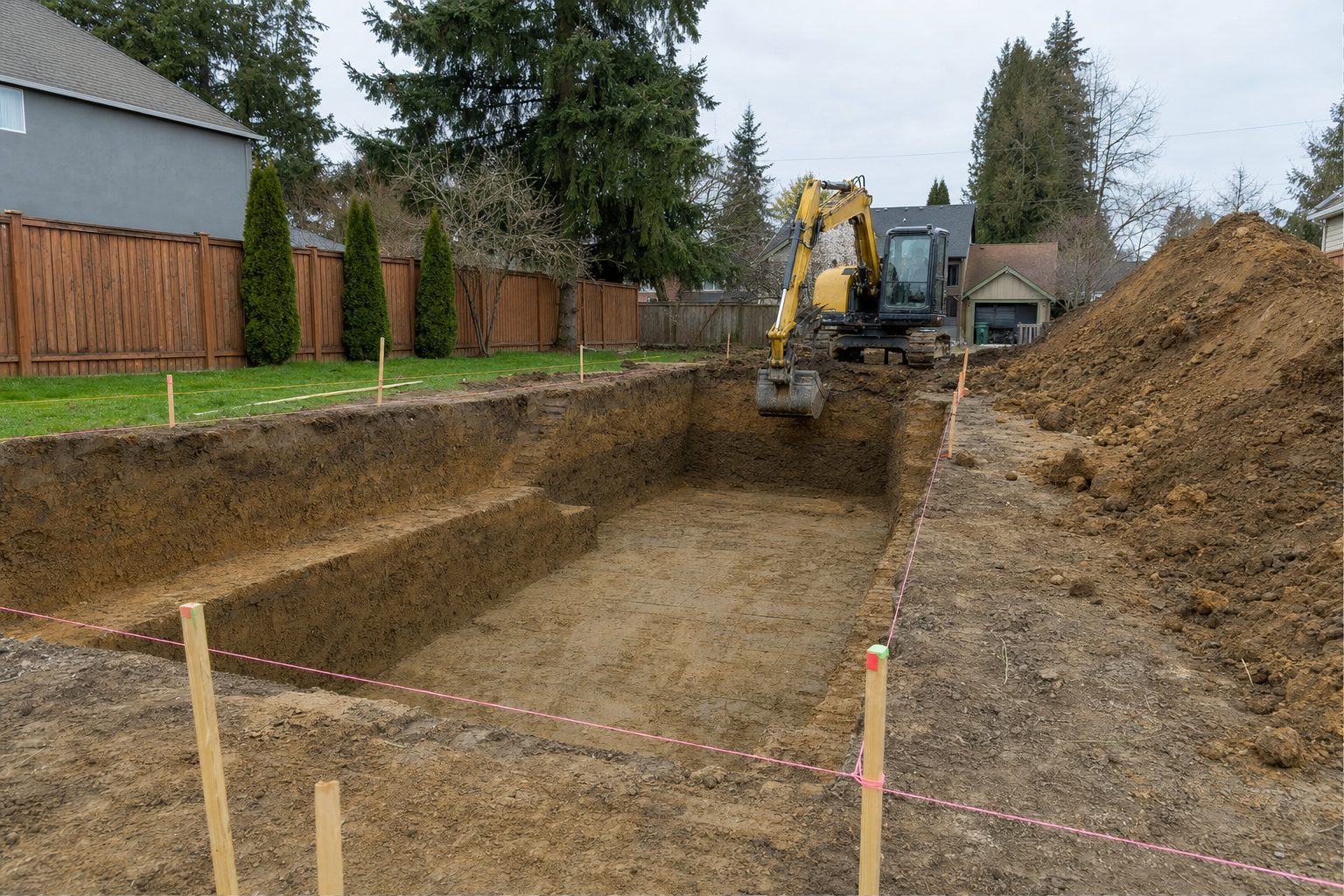
As an excavation contractor in Virginia we clear land, mulch overgrown acreage, build house pads and driveways, dig foundations, install septic-area grading and underground utilities, cut ponds, shape drainage, and demolish structures. As a general contractor in Virginia we then build on top of that work: homes, additions, garages, barns, shops, remodels, roofs, decks, concrete and commercial buildings. Most of our Virginia clients hire us for both, which is the entire point of One Source. Start to Finish.
Virginia work splits into three broad types for us. Rural landowner projects — clearing, drives, pads, barns, ponds, drainage — are the heart of it. Residential construction and renovation runs from Victoria and Kenbridge out to the Richmond suburbs. And commercial site development and tenant improvement work concentrates in the Petersburg, Colonial Heights, Chesterfield and Henrico corridor where growth is.
Virginia Soils, Terrain & What They Cost You
Southside and Central Virginia sit largely in the Piedmont, where the subsoil is a stiff red clay over saprolite and, closer to the surface than people expect, weathered rock. Clay holds water, gets slick, and pumps under truck traffic when saturated. It also makes excellent structural fill when it is placed at the right moisture content and compacted in lifts — and a miserable mess when it is not. That single variable is why two excavation bids on the same Virginia lot can differ so widely: one accounts for moisture conditioning and undercut, the other assumes a dry week.
East and south, toward Brunswick, Sussex, Greensville and the Petersburg area, you cross into coastal plain sands and sandy loam. Those drain far better but bear poorly when wet and disturbed, so geotextile fabric, base stone depth and haul-road planning matter more. In the Richmond river corridor and the western reaches of Central Virginia, slopes steepen and rock gets shallow, which drives cut-and-fill quantities, retaining wall design and driveway grades. We dig test holes rather than guess, and we tell you what we found.
Climate: Rain, Freeze-Thaw & Tropical Remnants
Virginia's humid subtropical climate produces intense summer thunderstorms, wet late-winter and early-spring periods when clay sites are effectively unworkable, and periodic remnants of tropical systems that can drop several inches of rain in a day. That reality is built into how we schedule: erosion and sediment control installed and maintained rather than installed and forgotten, temporary diversions and silt fence checked after every storm, stone construction entrances that keep mud off public roads, and honest schedule contingency for February and March.
Freeze-thaw cycling here is moderate but real. It is hard on asphalt and unreinforced concrete, drives frost-depth footing requirements, and is the reason a driveway that ponds water will fail years earlier than one that sheds it. Our drainage work and driveway construction are specified with that cycling in mind.
Virginia Permitting, VDOT & Erosion Control
Construction in Virginia runs under the Virginia Uniform Statewide Building Code, administered by local building officials, so the code is consistent statewide while review speed and local interpretation are not. Land disturbance triggers erosion and sediment control requirements and, above certain thresholds, stormwater management permitting through the state program administered locally — which means a plan, a certified responsible land disturber, inspections and a maintenance obligation.
Two Virginia-specific items catch owners off guard. First, VDOT maintains most secondary roads in Virginia, so a new or modified driveway entrance generally requires a VDOT land use permit governing apron width, sight distance and culvert sizing. Second, onsite sewage systems are permitted through the Virginia Department of Health, and soil evaluation determines whether you get a conventional drainfield or a more expensive engineered alternative system. Utility locates go through Virginia 811 before any excavation, and localities in the eastern part of the state may add Chesapeake Bay Preservation Act requirements. We handle these applications as part of the job rather than handing you a phone number.
Typical Virginia Projects
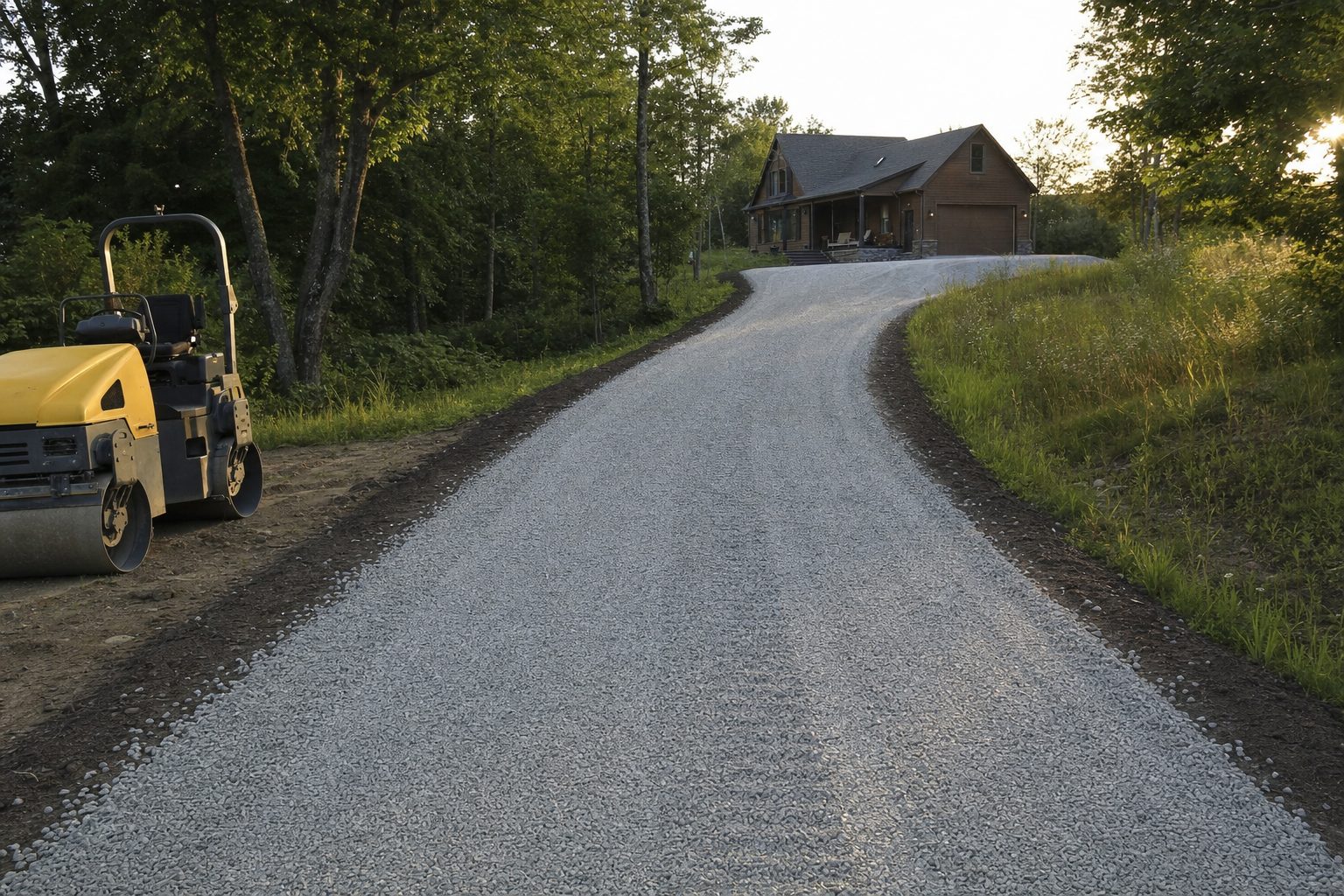
A representative month for our Virginia crews might include forestry mulching an overgrown twenty-acre tract in Lunenburg County, building a six-hundred-foot gravel driveway with a culvert and turnaround in Brunswick County, cutting and compacting a house pad plus footings in Dinwiddie County, correcting a wet basement in a 1950s Richmond-area home with regrading and buried downspout discharge, pouring a commercial dumpster pad and repaving a Colonial Heights parking lot, and erecting a forty-by-sixty post-frame shop with a slab and electrical service in Charlotte County.
Home ground
Where We Work In Southside & Central Virginia
Virginia is our home base and our deepest coverage. These are the communities and counties where our crews, equipment and permit knowledge are strongest.
Lunenburg County
Lunenburg County is where we know the ground best — rolling Piedmont farmland, red clay subsoil, mature hardwood and pine tracts, and a lot of properties served by private wells and onsite septic. Typical work here is land clearing and forestry mulching on family acreage, long gravel and asphalt driveways with culverts, house pads and foundations for homes built on inherited land, pole barns and equipment sheds, pond work, and drainage corrections around older farmhouses that were built before anyone thought about grading. We are close enough to Kenbridge and the surrounding roads that mobilization is cheap and we can get back the next day when something needs attention.
Brunswick County
South of us, Brunswick County around Lawrenceville, Alberta and Blackstone's southern reach runs flatter and sandier as you approach the fall line, with timber tracts, farm operations and a growing amount of rural residential construction. Sandy loam drains well but rutting and pumping under haul traffic are real problems in wet weather, so structural fill and geotextile separation earn their cost. We do timber-tract cleanup and stump removal, farm road and logging access construction, agricultural building pads, septic-area grading, and utility trenching for outbuildings and shops.
Dinwiddie County
Dinwiddie County sits between us and the Petersburg–Richmond corridor, and it shows the transition: Piedmont clay to the west, coastal plain sand to the east, and steady residential and light commercial growth along the routes toward Interstate 85 and Interstate 95. We handle new home site packages, subdivision lot finishing, commercial pads and parking, driveway entrances requiring VDOT land use permits, stormwater management facilities, and underground utility connections where public water and sewer reach and well-and-septic work where they do not.
Greater Richmond Area
The Richmond metro — the city plus Chesterfield, Henrico, Powhatan, Goochland, Hanover, Prince George, Colonial Heights, Hopewell and Petersburg — is where our commercial and remodeling work concentrates. Denser jurisdictions mean stricter erosion and sediment control inspection, real stormwater quality requirements, tighter site logistics and permit review timelines that have to be planned around. Typical projects: commercial site development and parking lots, tenant improvements, whole-home renovations and additions in established neighborhoods, basement and crawlspace water corrections, retaining walls on the steeper river-corridor lots, and driveway replacement.
Southside Virginia
Southside covers the tier of counties along the North Carolina line — Mecklenburg, Charlotte, Halifax, Nottoway, Amelia, Prince Edward, Greensville and Sussex among them. This is agricultural and timber country with generous lot sizes, long private drives, ponds and farm infrastructure, and a lot of deferred maintenance on roads and drainage. Forestry mulching, land clearing, farm and hunting access roads, pond dams and spillways, barns and shops, and full site packages for people building on land they already own are our bread and butter across this region.
Central Virginia
North and west of Richmond into Central Virginia, terrain gets more rolling and rock gets closer to the surface. Cut-and-fill quantities climb, driveways need real attention to sustained grade, and hillside drainage has to be engineered rather than assumed. We build house pads on sloped ground, retaining walls and terraces, driveways with cross-slope and culverts sized to the drainage area, and full-depth drainage corrections where runoff from uphill neighbors is the actual problem.
Coverage
Virginia Communities & Counties We Serve
We routinely work these localities. If you are just outside the list, call — we travel for the right project.
- Kenbridge
- Lunenburg County
- Brunswick County
- Lawrenceville
- Alberta
- Dinwiddie County
- Blackstone
- Nottoway County
- Amelia County
- Charlotte County
- Mecklenburg County
- Prince Edward County
- Halifax County
- Petersburg
- Colonial Heights
- Hopewell
- Prince George County
- Chesterfield County
- Henrico County
- City of Richmond
- Powhatan County
- Goochland County
- Sussex & Greensville Counties
Working On Something In Virginia?
We can usually get an estimator to a Southside or Central Virginia property within a few days. Free written estimates.
Local conditions
What Makes Building In Virginia Different
The four factors that most often move a Virginia project budget:
| Factor | What it means for your project |
|---|---|
| Soils | Piedmont red clay holds water and pumps when wet but compacts well when moisture-conditioned; coastal plain sands drain well but need fabric and stone under traffic. Shallow weathered rock in Central Virginia raises cut costs. |
| Climate | Wet late winter and early spring can stop clay earthwork for weeks. Intense summer storms and tropical remnants demand real erosion control. Moderate freeze-thaw punishes pavement and slabs that hold water. |
| Permitting | Virginia Uniform Statewide Building Code enforced locally; erosion and sediment control plus state stormwater program above disturbance thresholds; VDOT land use permit for entrances on state-maintained roads; Virginia Department of Health permits for onsite septic. |
| Project mix | Rural land development, long driveways, farm and equestrian infrastructure and post-frame buildings in Southside; renovation, drainage repair, retaining walls and commercial site work in the greater Richmond area. |
Local, not regional
Hire The Contractor Who Drives Past Your Property
Mobilization costs money, and distance costs responsiveness. A contractor based two hours away prices travel into every trip and takes a week to come back for a punch item. We are based in Lunenburg County. For most of Southside and Central Virginia, coming back is not a scheduling event.
Have a Virginia project? Request a free estimate, or call either number and ask for the Virginia schedule.
Answers
Frequently Asked Questions
Questions we get from Virginia landowners, homeowners and developers.
What part of Virginia do you cover?
Our base is Lunenburg County, and our core coverage runs across Southside and Central Virginia: Lunenburg, Brunswick, Dinwiddie, Nottoway, Amelia, Charlotte, Mecklenburg, Prince Edward and Halifax counties, plus Petersburg, Colonial Heights, Hopewell, Prince George and the greater Richmond area including Chesterfield, Henrico, Powhatan and Goochland. We take larger projects beyond that footprint - call with the location and scope.
Do I need a VDOT permit for my driveway entrance?
If your driveway connects to a road maintained by VDOT, which covers most secondary roads in Virginia, then a land use permit is generally required. It governs entrance width, apron construction, sight distance and culvert size and material. We prepare and submit the application and build the entrance to the approved detail, because an unpermitted entrance can be ordered removed later.
How does Virginia red clay affect my project cost?
Clay is workable and makes good structural fill when it is placed near optimum moisture and compacted in lifts. Wet clay is a different animal: it pumps under traffic, will not compact, and can force undercut and stone stabilization. That is why we dig test holes, look at the season, and price moisture conditioning or undercut as identified line items rather than absorbing an unknown into a lump sum.
Can you help if my Virginia property has never been developed?
Yes, and that is a large part of what we do. We evaluate access from the road, clear and mulch the building envelope, assess where water goes, coordinate soil evaluation for a septic system through the health department process, plan the driveway route and grade, and build the pad, foundation and utilities. Getting this assessment before you buy plans is the single best money a Virginia landowner can spend.
Do you do erosion and sediment control and stormwater compliance?
Yes. Land disturbance in Virginia triggers erosion and sediment control requirements, and larger disturbances trigger state stormwater management permitting administered by the locality. We install and maintain silt fence, diversions, sediment traps, stone construction entrances and inlet protection, keep the site inspectable, and build permanent stormwater facilities where the approved plan requires them.
Virginia Projects Start With A Site Visit
Call (833) BY-BEAST or (804) 767-7944, or send the property address and what you are trying to build. Free written estimates across Southside, Central Virginia and the Richmond area.